

Living on the Gold Coast is a dream for many, with its stunning beaches, vibrant community, and endless sunshine. But amidst the beauty and lifestyle, managing household expenses, like the water bill, remains an essential part of everyday life.
Water resource strategies in Queensland are complex. The subtropical climate is known to bring significant rainfall that presents a risk of flash flooding. There can also be periods of prolonged dry weather, leading to drought conditions. The Gold Coast region must plan and work cooperatively to balance the challenges of both floods and droughts, requiring comprehensive water management strategies to cope with these varying climatic conditions.
During droughts, residents are encouraged to conserve water and additional infrastructure projects may be called in, such as desalination plants and water recycling, to help ensure a stable water supply.
Water bills on the Gold Coast reflect the costs of essential services such as drinking water, sewerage, and waste utility management. These services are provided to the Gold Coast by South East Queensland (SEQ) and overseen by the local council, City of Gold Coast.
Whether you’re a long-time resident or a newcomer settling into this coastal paradise, understanding the average water bills can help you plan your budget more effectively and avoid any surprises.
A standard household in the Gold Coast uses about 160kL (kilolitres) of water per year. This figure has been used to calculate average annual water bills below between 2022 and 2025 using the prices set for SEQ councils.
|
Year |
Cost per kL (AUD) |
Annual Water Bill (AUD) |
| 2022–23 | $3.301 | $528.16 |
| 2023–24 | $3.371 | $539.36 |
| 2024–25 | $3.444 | $551.04 |
| 2005–26 | $3.517 | $562.72 |
How much water a property requires depends on household size and various factors that can significantly change the average costs of water bills.
The local government and regulatory bodies play a significant role in setting water prices, considering economic factors and the requirement to provide reliable, high-quality water services. The price of water and water delivery are always changing, which means the average water bill for households is changing too. Just a few cents can make a big difference to a household’s annual water costs.
In this blog, we’ll dive into what you can expect to pay for water on the Gold Coast, factors that influence these costs, and tips to keep your bills manageable without sacrificing your quality of life. So, let’s turn on the tap and explore everything you need to know about water expenses in this beautiful region!
How to read and understand your water bill
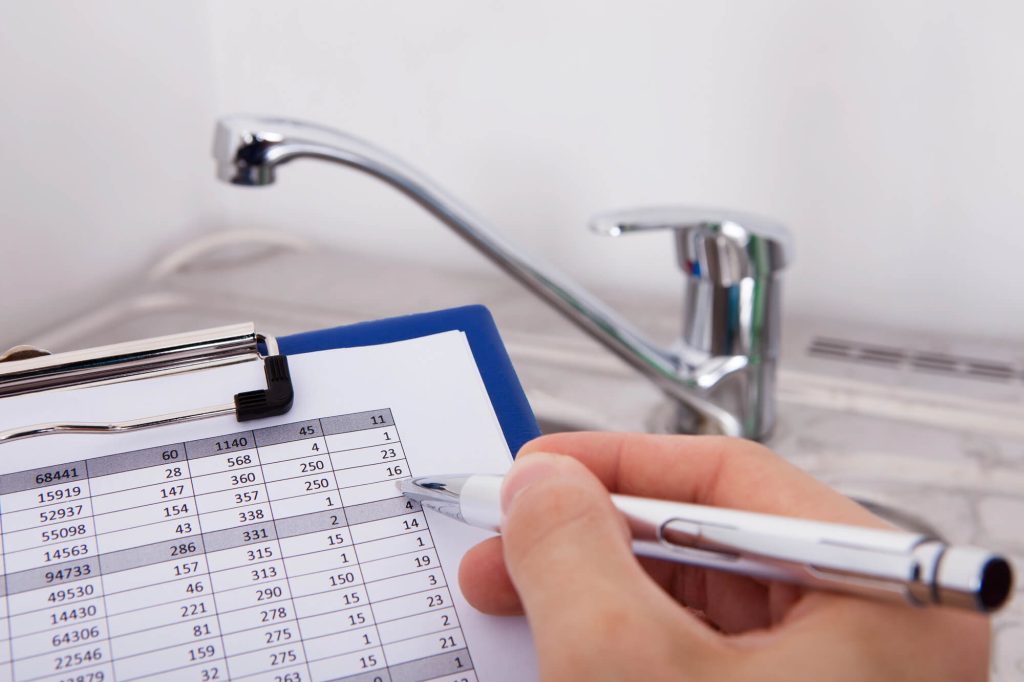
Water bills are sent out every quarter. Before a bill is sent the water meter at the property will be read. The bill covers the costs of both water use and sewerage services used over the 90+ days.
There are three main aspects of your water bill you need to be able to read and understand to take control of water consumption and ultimately reduce your average water bill.
- Know who is responsible for setting prices and what the current and immediate future set costs will be.
- Interpret the details provided in the statement to see how they are related to your usage and make comparisons to local averages.
- Read the property water meter to manage leaks or find mistakes in billing.
Understanding the billing structure helps residents manage their water consumption and financial planning effectively.
Who sets Gold Coast’s water price?
In Queensland, particularly on the Gold Coast, water prices are determined by a combination of factors including supply and demand, infrastructure costs, and the necessary investment in sustaining and improving water service networks.
Water prices are regulated by local councils and utility companies who determine the expenses associated with both water usage, which varies based on the amount of water consumed, and water access, which is a fixed rate for maintaining the water network connection.
The water provider for the Gold Coast is SEQ. They work in conjunction with the City of Gold Coast council to ensure water is maintained and delivered to set standards.
What information is provided on a typical water bill?
A typical water bill will provide a breakdown of charges for the relevant billing period. It includes:
- The billing period: 90 to 92 days, the billing period will include the date the meter was read.
- Fixed charges: Regardless of how much water a property uses this fixed charge covers ongoing access to water and sewerage networks.
- Water access charge: a regular charge for connection to the water supply.
- Water usage charge: A set fee per kilolitre of use, paid by the volume of water used.
- Sewerage access charge: a regular charge for ongoing sewerage services.
- Guide to reading the bill: often includes a graph or a chart showing usage over time.
- Contact information for support or to set up a payment plan if necessary.
It’s important to understand that even if the property has been vacant the fixed charges and connection fees will still apply. The volume of water consumption is the part that you can influence by reducing your water use or using smart appliances that are water efficient.
Reading Your Water Meter
The water meter records the volume of water used at the property, enabling accurate billing. To know if you are being billed correctly, check the meter routinely and compare it to the numbers recorded on the bill. If paying by direct debit, meter readings will also help to calculate the automatic payments before they are taken from an account.

Tips for identifying possible errors or discrepancies
If you feel your water bill is too high, it could be that there was an error or you have an issue with water delivery to your property. To identify errors on a water bill:
- Compare current readings with past bills – spikes in usage could indicate a leak.
- Ensure the meter number matches the one on your bill.
- Review any estimated bills; if too high compared to actual usage, contact the provider.
- If on a payment plan, check that instalments match the agreed terms.
Tips for reducing water usage and saving money
Reducing water consumption and managing leaks can significantly lower water expenses. Adopting water-saving habits, utilising water-efficient products, and practising water-wise gardening strategies contribute greatly to conservation efforts and financial savings.
Water-saving habits and lifestyle changes
Water saving can be as simple as small adjustments to daily routines such as taking shorter showers, turning off taps while brushing teeth or shaving, and using full loads in dishwashers and washing machines. It’s important to regularly check for and repair any leaks, which can lead to substantial water loss over time. A qualified plumber will be able to help.
Installing water-efficient fixtures and appliances
Investment in water-efficient appliances, such as toilets with a dual flush system and low-flow showerheads, leads to both conservation and cost reductions. Households need to seek out appliances with a high WELS rating, as these are assessed to be more water-efficient. Replacing old fixtures and appliances with these efficient models can contribute to significant long-term savings.
Landscaping and gardening tips for water conservation
Landscaping choices and gardening methods play a significant role in minimising outdoor water use. Native, drought-resistant plants require minimal watering, look amazing and help local wildlife thrive. Collecting rainwater in tanks or barrels gives you free water for garden irrigation and laying down mulch will help to retain soil moisture. Additionally, using drip irrigation systems targets plant roots directly, reducing evaporation and unnecessary water waste.
Conclusion
The average water bill in the Gold Coast region is around $240 per quarter when factoring in the price of water, water delivery, and sewerage costs. Households can attribute this to both variable and fixed charges in the utility bill. Through responsible water use and conservation efforts, residents can effect change in their water spending.
The Queensland Government and the City of Gold Coast have roles in managing water resources amid periodic droughts, ensuring supply meets demand. Australians are urged to be water-wise, as conscientious usage helps preserve this precious resource for a growing population.
Local water providers set water prices that reflect environmental and resource management efforts as well as maintenance and safe water treatment and delivery. Paying attention to how water costs are managed and billed helps residents maintain control over their water expenditure, giving households on the Gold Coast the opportunity to reduce their water bills by adopting water-saving practices and staying informed about local water pricing and policies.
Related posts:
 How To Install A Stormwater Pit In 6 Steps
 How to Get Rid of Drain Flies? Follow These Steps!
 All You Need to Know About Gas Compliance Certificate QLD
 Is Gold Coast Tap Water Safe To Drink?
 DIY or Professional Help? A Guide To Handling Water Leak Repairs
 Is your hot water system leaking? Here’s what you can do!